Marine biotechnologies: when oceans inspire tomorrow’s innovations

With their richness and unique ecosystems, our oceans are inspiring innovative solutions for the development of new technologies in various fields. This is especially true given that this marine biodiversity could well be the primary source of new molecules in the coming decades.
Explore an immersive space at the 70.8 museum and discover how marine biotechnology is part of our everyday lives.

From the ocean to the laboratory: marine biotechnologies serving the future

The marine environment is the most biologically and chemically diverse. The number of species that researchers can study is immense because our oceans host a vast number of living organisms. To date, approximately 300,000 marine species have been described. Observing the behaviour of marine animals, their lifestyles and physiology reveals astonishing properties.

The challenges of today and the future are to explore, understand and preserve marine resources in the face of the threats to them, such as climate change, pollution and overfishing.

What are biotechnologies?

Biotechnologies are defined as the application of science and technology to living organisms. Biotechnologies make it possible to develop products in numerous fields: cosmetics, food processing, nutrition, health, agriculture, materials, chemistry, energy etc.

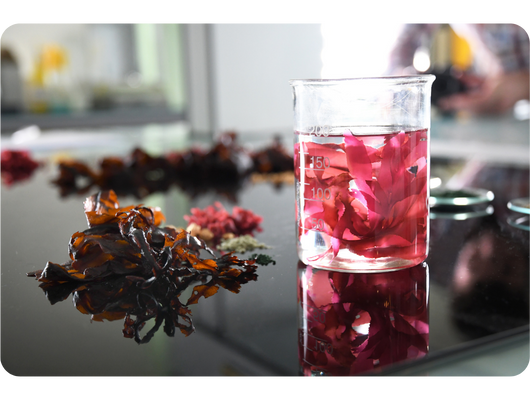
Algues dans un laboratoire Science et Mer

Several biotechnologies currently exist and these are known as white, red, and green biotechnologies. They are given these names according to their fields of application (industry, therapeutics, diagnostics and agriculture). Marine biotechnologies are also known as blue biotechnologies. They concern all of the biological resources present in the sea: plants, animals, bacteria, microscopic fungi and archaea.

Biotechnology is as intriguing as it is fascinating. It is part of our daily lives and has been used for more than 6,000 years in the production of bread and cheese. The advent of modern biotechnology dates back to the early 1950s, when Francis Crick and James Watson deciphered the structure of DNA. It promised major advances that would allow us to address the major challenges of our time.

Photo: © Science et Mer

Marine biotechnology is everywhere in our lives!

Marine organisms – microalgae, bacteria, sponges and molluscs – produce biomolecules with remarkable properties: antibiotics, antitumour agents, antioxidants and moisturising agents. These compounds are now used in the pharmaceutical, cosmetic, food and environmental sectors. Marine organisms also serve as a source of inspiration for creating more environmentally friendly materials.

However, many of these species live in sensitive and vulnerable habitats. Uncontrolled exploitation risks jeopardising their survival and irreparably disrupting marine ecosystems. The use of sustainable methods, such as bioreactor culture or laboratory synthesis of molecules inspired by living organisms, is essential to combining innovation and the conservation of biodiversity. Protecting the oceans while innovating is possible!


Technological innovations based on algae

Research on algae has led to significant progress in extraction and processing technologies. By analysing their biochemical composition, scientists have been able to isolate substances of interest such as polysaccharides, proteins, pigments and antioxidants, thereby opening up new avenues for their application in various sectors.

In the food industry, these advances have made it possible to design functional ingredients with interesting nutritional properties, such as natural thickeners (agar-agar and carrageenan), omega-3 rich supplements from microalgae and products enriched with fibre and vegetable proteins.

In the cosmetic sector, bioactive compounds extracted from algae (such as fucans, phlorotannins and certain marine peptides) are incorporated into creams, lotions and patches for their moisturising, soothing, anti-ageing and antioxidant effects. These ingredients meet a growing demand for natural and environmentally friendly formulas.

In the sustainable materials sector, algae-derived biopolymers are used to design biodegradable bioplastics, offering a promising alternative to petroleum-based plastics. This use aligns with a sustainable and eco-friendly approach to innovation, utilising abundant and renewable marine resources.

Exceptional marine haemoglobin

Marine biologist Franck Zal discovered the exceptional properties of haemoglobin from blow lugworms (also known as sandworms) living on the beaches of the Atlantic coast. Unlike human haemoglobin, lugworm haemoglobin can transport up to 40 times more oxygen and diffuse it very efficiently, even in the absence of red blood cells. This unique characteristic makes it a universal oxygen carrier, compatible with all blood types and very stable.

Based on this discovery, Franck founded Hemarina, a company that develops innovative medical applications, including a blood substitute used to preserve organs before transplantation, thereby improving the chances of successful transplants. Other applications are under investigation, such as oxygenating dressings for wound healing and treatments for ischaemic (lowered blood flow) diseases.

This advance illustrates the remarkable potential of marine organisms in the field of biomedicine and puts French marine biotechnologies at the forefront of medical innovation.


Brittany: a pioneer in blue biotechnology

The Brittany region boasts a remarkable marine biolibrary, with unique collections of marine microorganisms and strain libraries. Its laboratories work on archaea and bacteria from the marine environment, exploring innovative avenues in medicine, cosmetics and the environment.

Leveraging a strong network of scientific and industrial partners, the region is establishing itself as a leading player at the national and international scales. This dynamic is highlighted by the 70.8 museum, through an exhibition deeply rooted in current research.


Want to know more? Visit 70.8!

On the ground floor, discover the fascinating world of marine biotechnology by enjoying an interactive scenography with many fun features.

During school holidays, guided tours are offered by a science mediator, making it the perfect opportunity to pose all your questions.

✅ Ouverture le jeudi 14 mai !

70.8 est bien ouvert ce jeudi 14 mai de 11h à 18h.

Réservez votre billet